
When growing root vegetables like sweet potatoes, rocky and poor garden soil can cause headaches for gardeners, and wireworms, voles, and other burrowing pests can ruin your crop in no time flat. However, growing sweet potatoes in containers can save garden space, keep plant pests at bay, and produce a large crop of root veggies even if your garden soil is less than ideal. Use these simple, step-by-step instructions to plant, grow, and harvest your own sweet potatoes in a container garden.
Choosing Containers
Containers made of plastic, terra-cotta, ceramic, and stone are all suitable for growing sweet potatoes. Just make sure your planters are made of food-safe materials and have plenty of drainage holes to prevent soggy soil.
Fabric grow bags are particularly useful for growing sweet potatoes, and specialized potato growing bags are even better. Potato growing bags have openings at the base that allow gardeners to check on growing root crops without disturbing the soil.
As far as container size goes, bigger pots are always better. Sweet potatoes will produce a larger harvest of roots in spacious containers, so choose pots that are at least 20 inches wide by 15 inches deep. A single sweet potato plant will grow well in a 10-gallon container, while 20-gallon containers can accommodate about three sweet potato plants.
If you’re on a budget, you can grow sweet potatoes in large plastic buckets drilled with drainage holes or upcycled bird feed bags.
Best Sweet Potato Varieties for Containers
Sweet potato plants sprawl and spread vigorously, which can quickly overwhelm a small garden. To keep plants manageable, look for bush-type or vineless sweet potato varieties, which grow compactly and are ideal for container growing. Varieties like ‘Vardaman’ and ‘Porto Rico’ are particularly good for growing in pots.
When to Plant Sweet Potatoes in Containers
Sweet potatoes are heat-loving plants that don’t tolerate cold weather. In warm regions, sweet potatoes can be planted outdoors three to four weeks after the last frost date in spring, when nighttime temperatures are consistently above 55°F. However, if you live in an area with a short growing season, starting sweet potatoes indoors about six to eight weeks before your last frost date is best.
How to Plant Sweet Potatoes in Containers
Before you can start planting, you need to get your hands on sweet potato slips, which are the leafy offshoots from sweet potatoes that eventually grow into new plants. Sweet potato slips are usually purchased from garden centers, but you can grow your own sweet potato slips.
Once you have the sweet potato slips, place them in a shallow dish of water for a few days until they produce roots. Plant store-bought slips as soon as possible to avoid wilted leaves.
Starting Sweet Potatoes Indoors
If you’re starting sweet potatoes indoors in spring:
- Fill small pots with a quality seed-starting mix or potting soil.
- Poke holes in the mix with your finger or a pencil.
- Plant the sweet potato slips deep enough to cover the roots with soil and support the stems.
- Keep the sweet potatoes under grow lights.
- Water regularly until the slips can be hardened off and transplanted outdoors.
Starting Sweet Potatoes Outdoors or Transplanting
If you’re starting sweet potato slips outside or transplanting:
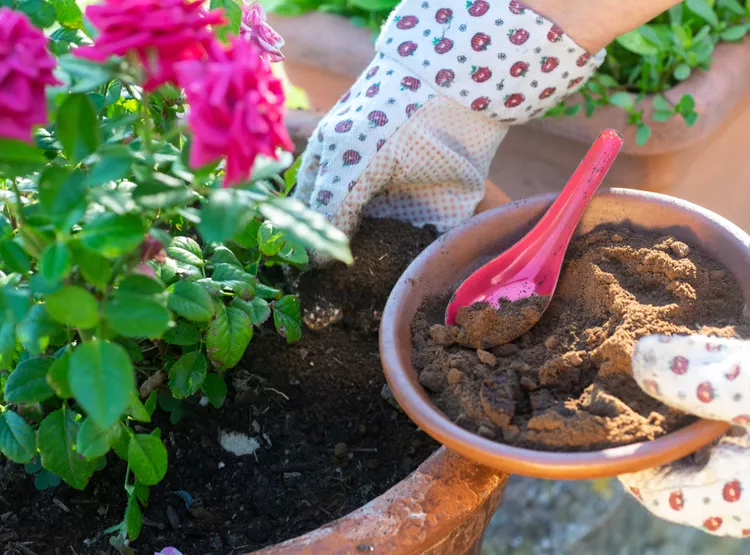
- Fill roomy containers most of the way up with a well-draining potting mix amended with compost, aged manure, or a slow-release fertilizer with plenty of potassium.
- Poke planting holes for the slips with your finger or a pencil.
- Bury the base of the slips deep enough to cover the roots and support the young stems.
- Add a thin layer of straw mulch over the soil.
- Move the pots into a warm and sunny location that receives at least 6 to 8 hours of bright light daily.
- Water regularly.
Sweet potato slips are much better for planting than using grocery store sweet potatoes, which are often treated to prevent sprouting and might harbor pests and diseases that can infect gardens.
How to Care for Sweet Potatoes in Containers
Unlike standard potatoes, sweet potatoes don’t need hilling, and pests are less likely to trouble container-grown plants. Sweet potatoes usually don’t need to be pruned or trellised as long as you grow them in spacious planters. Just keep in mind that plants grown in pots need more fertilizer and water than sweet potatoes grown in in-ground gardens.
Light
Sweet potatoes are full-sun plants that need at least 6 to 8 hours of direct light to grow properly. Sunny patios or porches can be excellent places for these sun-loving crops.
Soil and Water
Plant sweet potatoes in a well-draining potting mix, and don’t be tempted to fill your growing containers with garden soil. Garden soil is too dense for potted plants and can cause drainage issues and root rot.
Regular watering is critical for growing healthy sweet potatoes, but be careful not to overdo it. Sweet potatoes should receive about 1 inch of water per week, although plants should be watered less at the end of the season to keep the sweet potato roots from cracking. A good rule of thumb is to water sweet potatoes when the top 1 to 2 inches of soil feels dry to the touch.
Fertilizer
Like other heavy feeders, sweet potatoes need to be fertilized throughout the season to ensure a good harvest. At planting time, give the plants a boost by amending the soil with compost, aged manure, or slow-release fertilizer. Then apply organic liquid or granular fertilizers according to the instructions on the fertilizer packaging as the season progresses. In general, liquid fertilizers are applied every two weeks, while granular fertilizers are applied monthly.
Harvesting Sweet Potatoes in Containers
Sweet potatoes are usually harvested in late summer to fall or about 85 to 120 days after planting. However, you can pick edible sweet potato greens little by little throughout the growing season.
Because sweet potatoes grow underground, judging whether they're ready to harvest can be tricky. However, if the leaves have begun to yellow and die back, the roots are usually ready.
One great thing about growing sweet potatoes in pots is that harvesting is super easy. While sweet potatoes can be carefully dug by hand, when you keep sweet potatoes in containers, you can dump the entire growing container contents onto a tarp and gather up the sweet potatoes you see. Sweet potatoes are edible at any size, and different plant varieties can produce yellow, orange, or even white roots.
After harvesting, cure the sweet potatoes in a warm, dry place for 10 to 14 days to extend their shelf life. Then, store the sweet potatoes in your pantry or a well-ventilated root cellar until you're ready to use them in your favorite recipes.