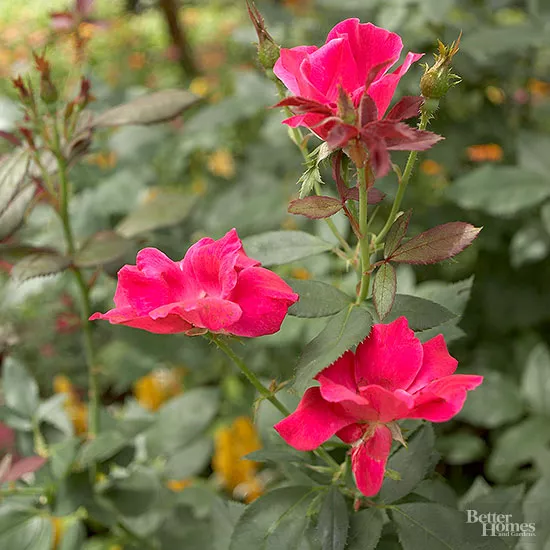
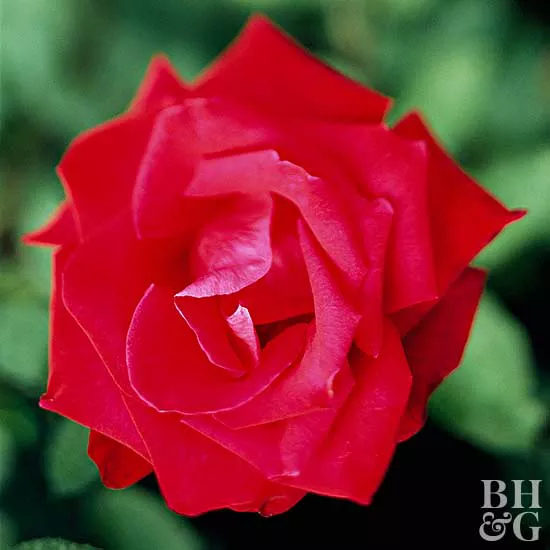
With their iconic bud shape and petaled blooms, hybrid tea roses are well worth the effort of growing them. They are considered one of the oldest classes of roses. It's believed that the class began with the rose 'La France' in 1867, which was created by crossing a tea rose with a hybrid perpetual rose. More cross-breeding followed but it wasn't until the 'Peace' rose was officially branded in 1945 that hybrid tea roses became popular. 'Peace' personified all the best qualities of a hybrid tea rose. This cultivar is still easy to find today, along with different variations of it.
Hybrid tea roses are the standard for cut flower roses and they are most commonly grown to be a cut flower. As such, the plants themselves aren't the most beautiful in a garden setting. With quick-growing upright stems, few leaves, and generally only one bud per stem, hybrid tea roses look rather sparse as a plant. However, this also works to their advantage, as they blend in well with the right perennial companion plants.
Hybrid Tea Rose Overview
| Genus Name | Rosa x hybrida |
| Common Name | Hybrid Tea Rose |
| Plant Type | Rose |
| Light | Sun |
| Height | 3 to 8 feet |
| Width | 2 to 3 feet |
| Flower Color | Green, Orange, Pink, Purple, Red, White, Yellow |
| Foliage Color | Blue/Green |
| Season Features | Summer Bloom |
| Special Features | Cut Flowers, Fragrance, Good for Containers |
| Zones | 5, 6, 7, 8, 9 |
| Propagation | Grafting |
Where to Plant Hybrid Tea Rose
Select a spot where the rose is protected from strong winds and gets at least four to six hours of full sun every day. The soil should be well-drained, rich in organic matter, and slightly acidic.
Giving the rose ample space is key because it needs good air circulation. Choose neighboring plants accordingly and keep them pruned to avoid the vegetation getting dense.
How and When to Plant Hybrid Tea Rose
Potted hybrid tea roses can be planted at any time of the year, although planting them when they are dormant is the best time. In cold climates, plant them in autumn; if your winters are mild and the ground does not freeze, the planting window is between autumn and early spring. Bare-root roses are typically sold by nurseries for late winter or spring planting.
Dig your planting hole wide enough to comfortably fit the roots and deep enough so the graft union (the bulging knob-like spot near the base of the plant) is buried 1 to 2 inches below the soil level in northern climates or just above the soil in warmer climates. Create a mound in the center and gently spread the roots out over it. Backfill with a mixture of the original soil and a few handfuls of compost or well-rotted manure. Make sure to fill any gaps and gently pack the soil down to remove air holes. After planting, check the location of the graft union to make sure it’s in the right spot. If necessary, adjust the planting depth. Water the base of your rose plant well.
Space hybrid tea roses 30 to 36 inches apart.
Hybrid Tea Rose Care Tips
Between regular watering, pruning, deadheading, fertilizing, and keeping an eye out for diseases and treating them promptly, hybrid tea roses are not low-maintenance plants.
Light
Like all roses, hybrid tea rose needs full sun. Less sun means poor-quality blooms, a higher chance of foliar disease, a greater likelihood of flopping stems, and overall weaker plants. Avoid strong afternoon sun, which leads to scorching of the leaves.
Soil and Water
Plant hybrid tea roses in soil that is rich in organic matter and well-drained, with a pH between 6.0 to 6.5.
In the absence of rain, watering them slowly and deeply on a regular basis is key. Hybrid tea roses struggle in dry conditions and the first thing to suffer is the bloom.
Temperature and Humidity
Although hybrid tea roses are winter-hardy to zone 5, they are prone to get damaged or killed by rapidly changing temperatures during the winter, such as a warm spell followed by subzero temperatures. Generally, hybrid tea roses do well in humid summer temperatures around 80 degrees F but high humidity is also a breeding ground for powdery mildew. In a humid climate, select a variety that is resistant to the fungus.
Fertilizer
Roses are heavy feeders that need fertilization on a regular basis. Use a specially formulated rose fertilizer and follow the label instructions. Repeat-blooming varieties may need additional fertilizer applications.
Pruning
Hybrid tea roses need pruning, and the best time to do it is late winter, just before the plants are breaking dormancy. First, remove any old, dead, or diseased wood. Cut long shoots back to 4 to 6 buds from the base, or roughly 10 to 15 inches above the graft. If there was severe winter dieback, cut back until you reach live wood. Smaller shoots should be cut back harder, leaving just a few buds or a few inches of shoot above ground level. A general rule of thumb is that stems need to be at least as thick as a pencil in order to support blooms.
As plants get older and canes become large and tough, cut all the way back to the ground. This encourages fresh new shoots from the base and increases air circulation to the center of the plant. Also check whether all of the shoots are coming from above the graft union. Shoots emerging from the rose rootstock are unwanted growth; cut those back all the way back to the main stem.
During the growing season, regularly deadheading your hybrid tea rose helps it to produce more flowers.
Potting and Repotting Hybrid Tea Rose
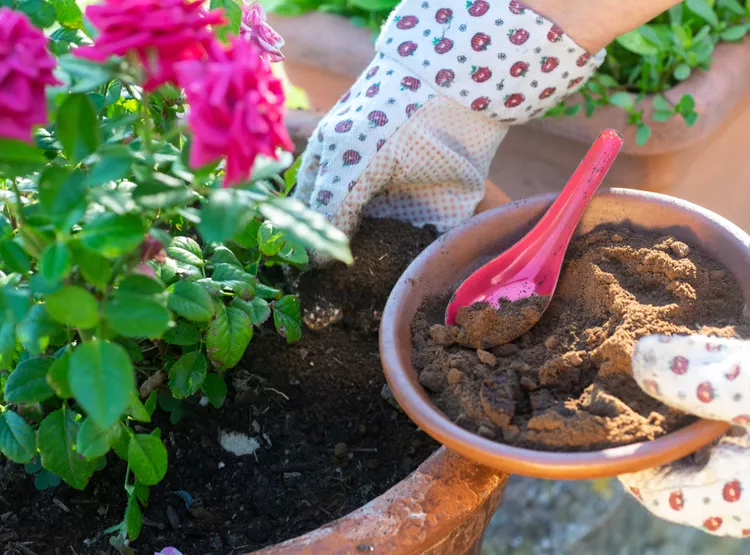
Smaller hybrid teas with a mature height of no more than 4 feet do well in containers. Select a container with large drainage holes and a minimum of 20 inches in diameter and at least the same equal depth to give the roots room to grow both wide and deep. Fill the container with well-draining potting mix. Container plants need more frequent watering than plants in garden soil.
Despite the winter-hardiness of hybrid tea roses, when they are grown in a pot, they need winterization, as the roots are not insulated against the soil the same way they are in garden soil. To protect them from cold damage, move the pot into an unheated shed or garage, sink the pot into the ground, insulate it with a thick layer of mulch, or winterize it by placing it in a second, larger pot to create a planting silo.
The rose will need repotting about every 3 years, or when it has outgrown its container. Use fresh potting soil when replanting it in a larger pot.
Pests and Problems
Foliar diseases are a major problem with roses, and hybrid teas are especially susceptible. The main culprit is usually black spot, a fungal disease that causes characteristic black spots on the foliage. In many climates, it's almost inevitable that roses get infected. The best proactive step is to plant the rose in full sun, prune properly for good airflow, and avoid getting the foliage wet when watering because fungal diseases are spread primarily by water droplets. To contain the spread, remove any affected leaves, as well as debris around plants.
Botrytis blight and crown gall are also common on hybrid tea roses. The plants also attract various pests, including spider mites and Japanese beetles.
How to Propagate Hybrid Tea Rose
Hybrid tea roses are propagated by grafting, in which hardier, more disease-resistant rootstock is used for a new plant. A hybrid tea rose that you grow from cuttings is likely less disease-resistant, vigorous, and long-lived than one that was grafted professionally in the nursery trade. When you propagate a tea rose via stem cuttings, you risk transmitting any diseases from the original plant to the new plant. Therefore, propagating your own tea roses is not recommended.
Types of Hybrid Tea Rose
'Pope John Paul II'
The long stems and classic form of 'Pope John Paul II' rose make it a top choice for flower arrangements. The pure white flowers on 4- to 5-foot plants are very fragrant.
'Peace'
This all-time favorite has large flowers that range from a light yellow to cream color. The edges of the petal are crimson-pink. This continually blooming variety grows a mere 4 feet tall.
'Fragrant Cloud'
For an especially fragrant hybrid tea rose, consider ‘Fragrant Cloud’. Its coral-red blooms combine notes of citrus, spice, fruit, and rosy damask. The fragrance of the blossoms is not the only thing that makes this variety stand out. The flowers are also large, up to 5 inches across.
'Double Delight'
One of the most distinctive hybrid tea roses, 'Double Delight' produces creamy white flowers with rich, cherry-red edges that deepen as the flower ages. This fragrant beauty blooms repeatedly from spring through fall.
'Just Joey'
Reaching 3 feet in height and 2 feet in width and with a bush growth habit, 'Just Joey' makes for an excellent container rose on your porch or patio. Its large ruffled 5-inch flowers with a fruity scent blend pale apricot and glowing orange color that contrasts beautifully with the deep-green foliage.
'Mister Lincoln'
Considered the standard for red roses by some rose experts, this award-winning hybrid tea rose has rich, velvety-red buds that lighten to cherry red as the blooms open. The rose has a strong fragrance. With a height of 4 to 6 feet, it is on the taller end of hybrid tea roses.
Hybrid Tea Rose Companion Plants
Lavender
This shrubby perennial appeals to almost every sense, with its calming scent, pungent taste, dainty flowers, and velvety gray-green leaves. Lavender is deer-resistant, attracts butterflies and pollinators, and may even deter Japanese beetles that seek out your rose plants. Zone 5-9
Dianthus
With its mounds or mats of grass-like blue-green foliage, this perennial with an abundance of starry flowers works well to distract from the lower, not-so-attractive woody parts of hybrid tea roses. Dianthus varies greatly in size, from tiny creeping groundcovers to 30-inch tall cut flowers. Even when it is not blooming, its foliage makes it an attractive plant. Zone 3-10
Catmint
Catmints are fast-growing plants, which makes them suitable neighbors for hybrid tea roses with their sparse foliage. When the plants begin to grow in spring, they form tidy little mounds of neat new foliage, then quickly grow outward and begin to set their buds for their flower show. Cutting the plant back after the bloom encourages a second flush of growth and keeps it tidy. Zone 3-9
Garden Plan For Hybrid Tea Rose
Front-Yard Rose Garden Plan
This gorgeous front-yard rose garden plan makes the entrance to your home memorable. The plan includes a colorful collection of 11 roses, including floribunda, hybrid tea, and grandiflora rose cultivars that are all hardy in zone 5-9. The roses fill in beds on either side of the walkway, bordered by a low boxwood hedge.