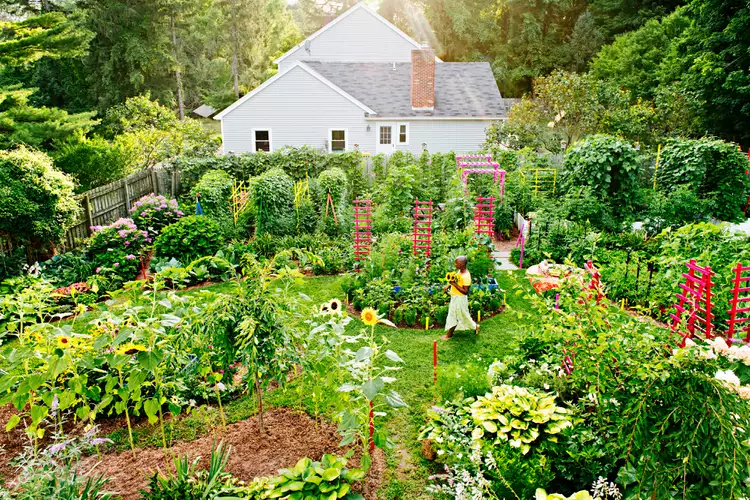
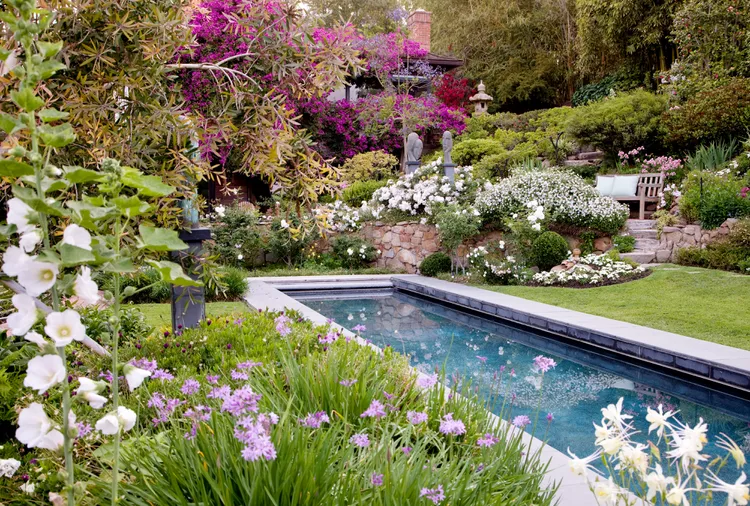
English cottage gardens have grown in popularity as people look for sustainable alternatives to perfectly manicured lawns and gardens. This garden style blends formal English garden ideas, such as hedges planted in straight lines and crisp evergreen accents, with a cottage garden filled with a lush, unkempt mix of perennials, annuals, roses, and billowy ornamental grasses.
The most iconic feature of an English cottage garden is the mixed border. These are large beds planted with a mixture of annuals, perennials, ornamental grasses, and shrubs. They're a charming, organized chaos that can be tougher to pull off than they look.
“It's a fine line between a beautiful naturalistic planting and a bloody mess,” says Tom Coward, head gardener at Gravetye Manor, an iconic British hotel on the former grounds of 19th-century Victorian wild garden proponent William Robinson.
Coward notes that the key to creating a mixed border that looks wild and natural and unplanned is to actually have a plan. Read on for his expert tips on artfully blending English garden ideas with the timeless informality of cottage style gardens to create stunning mixed borders.
Tom Coward is the head gardener at Gravetye Manor, a British hotel on the former grounds of 19th-century wild garden proponent William Robinson. The property comprises more than 1000 acres of lush gardens in the Sussex countryside.
1. Plan the Color Scheme
You’re going for the illusion of a natural color scheme, Coward says. “Nature puts plants together in ways we can only dream of mimicking, so you can be quite free with the color theory you use.” Focus on how colors go together and how they contrast, he says, and then pick your color combination. Then choose plants that fall in your chosen color scheme.
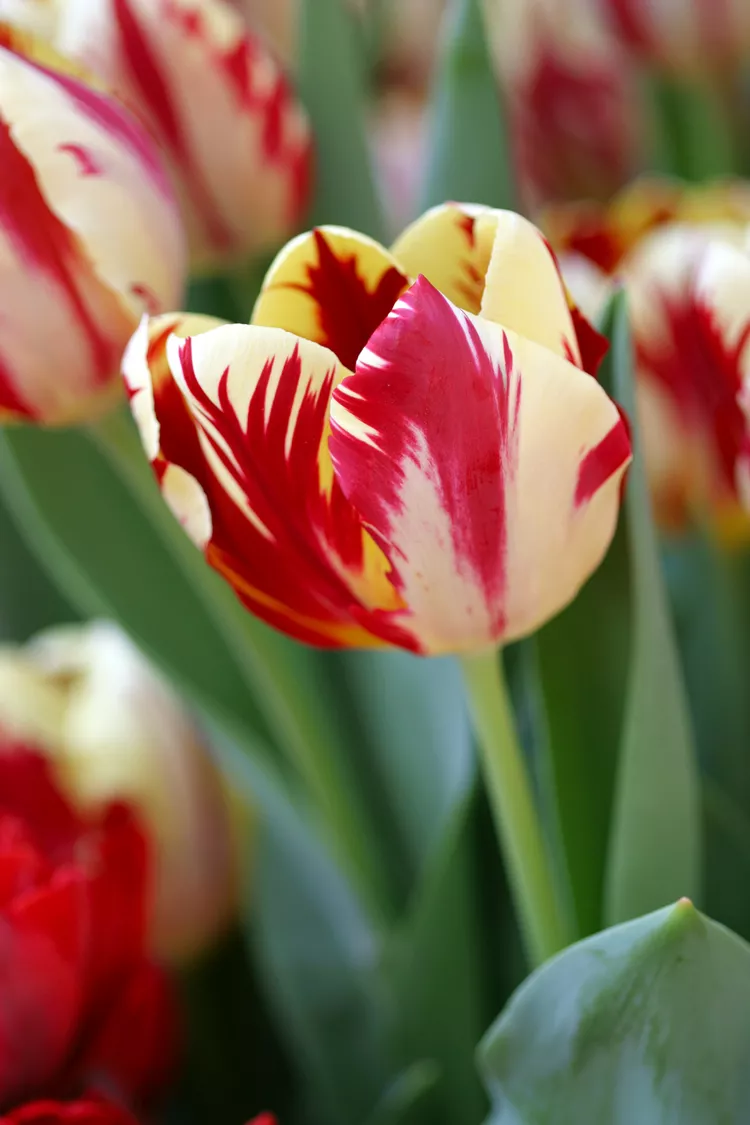
At Gravetye, Coward will put plants with blue and orange flowers together because they’re opposites and throw in some pink flowers for “a little bit of a clash,” he says. “It’s a little bit controversial, but it’s fun.” He’s used triadic schemes of orange, purple and green, and analogous color schemes of yellow, orange, and pink.
“Be adventurous,” he says. You can get away with a lot of color schemes, even bold ones, because the overall background color of green will tie everything together, Coward says.
2. Layer Leaf Textures
Choose plants with different leaf textures. “Texture is more important than the color because a variety of textures brings a sense of movement to a border,” Coward says. “Movement is very important to the look of a mixed border.”
Texture in a plant is determined by its leaf size. Plants with large leaves, like lamb’s ear, lady’s mantle, or heuchera add coarse texture, while plants with wispy, ferny, or narrow leaves like daylilies, yarrow, and ornamental grasses add fine texture. Plants with middle-sized leaves like irises, euphorbia, and azaleas add medium texture.
Mixing leaf textures gives your border more visual punch. A good mix of textures will make your garden look good whether it’s blooming or not, Coward says. Texture isn’t an easy design concept to grasp or see. Coward suggests taking a photo of your border in black and white so you can see the leaf textures better. If you don’t see enough texture in that black-and-white photo, mix in some plants with more leaf sizes. “Don’t be afraid to move plants around each season to tweak your design,” he says.
3. Plant Self Seeders
One of the easiest ways to get that desirable wild look in your garden is to include plants that will drop seeds and come back on their own. They can be annuals or perennials. Think zinnias, calendula, cosmos, coneflower, columbine, poppies, lupine, or asters. “You can get a self-sustaining population of plants that brings a naturalistic element to a formal planting,” Coward says. “That wild aspect is very, very beautiful and quite important because it brings irregularity to the garden.” It also means a little less work for you when the flowers plant themselves.
4. Include Shrubs and Trees
Create a backdrop for the colors and textures in the mixed border with shrubs, trees, and large clumps of ornamental grasses. “Woody material is so important,” Coward says. “It gives you structure all through the year.” Even when nothing else is blooming, the shrubs and trees serve as the architecture of the garden.
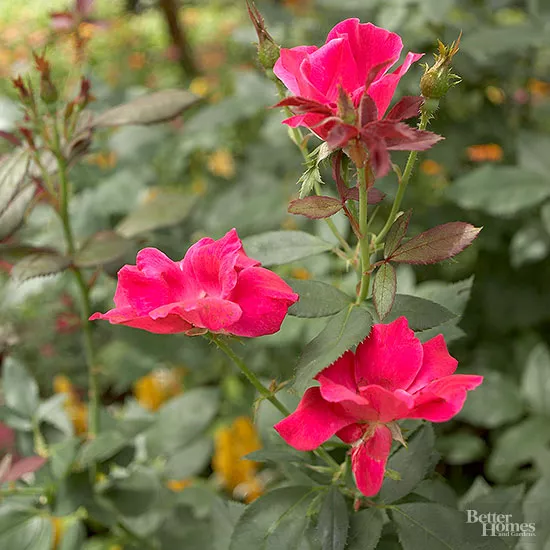
Coward calls these shrubs, grasses, and trees “anchor plants.” At Gravetye, he uses azaleas, roses, and heathers as anchor plants. “Without those plants, the borders would be really flat,” he says. “You can say that if you don't have shrubs, you don't have a garden.”
5. Set Out Tender Perennials
Keep your mixed flower beds and borders full of flowers by putting full-grown tender perennials into the garden in late spring, once spring blooms have faded. This adds a lush look to your mixed borders, Coward says. At Gravetye, Coward and his staff set out cannas and salvias in late spring to fill in the gaps in the mixed borders, then take cuttings or divisions in mid to late summer to overwinter in the greenhouse to transplant next year.
6. Don’t Weed, Edit
Consider leaving plants that come up on their own–plants some people might consider weeds. It’s your garden and your call. “Some call it weeding, I call it editing,” Coward says. “There’s a fine line between a weed and wanted. A weed is often just a plant in the wrong place.”
Those volunteer zinnias or the fleabane that popped up in the middle of your roses may add to the wild garden aesthetic, so consider leaving them there. “Open yourself to the idea that every plant has its own beauty,” Coward says. Those surprise plants can add to the wild and random aesthetic that’s essential to the classic mixed border.
7. Get to Know Your Garden
If your garden is new, take the time to see what plants come up in the spring and summer before you plant anything. “If you have a new garden don't do anything for at least a year,” Coward says. “Study the garden, see what the garden tells you, and learn what is already in the garden.”
Pay attention to the light your garden receives, too, so you can put the right plants in the right place. Watch the soil drainage. Once you know the planting space, you can make better decisions about plant choices.
“You can shove a load of annuals into your garden in an hour and they look wonderful straight away, but you’ll be better off long-term if you go slow and have patience,” Coward says. “A garden is an ongoing project, so take your time getting it right.”
8. Learn by Making Mistakes
Don’t be afraid to try new plants and layouts as you experiment with these English cottage garden ideas. “Embrace plants and enjoy them,” Coward says. “Do not be afraid to experiment and play with them.” So go ahead and try that new variety of coneflower, add the unidentified vining rose you got at the plant swap, and toss some seeds into the ground to see if they’ll grow.
“Try things and react to them,” Coward says. “If what you did or what you planted looks good, then you've learned something. If the garden looks worse, then you’ve made a mistake and learned more.” Have fun and relish the fact that a garden can always be replanted and reinvented, so there’s no fear of getting it wrong.
“A garden is a living thing that's constantly changing. It changes with the season. It changes with the weather. It changes with the light. It's a living organism that we're always interacting with so have fun listening to the story the plants are telling you.”