
The last few years have seen the spread of No Mow May, a campaign that encourages folks to hold off mowing their lawns in spring to reduce fossil fuel emissions and help pollinators. On the face of it, it seems almost too good to be true–you could do a lot of good things for the environment by doing literally nothing. So perhaps it’s not surprising that letting your lawn grow for a month has fallen short of its promises. And what about the rest of the growing season?
Rather than No Mow May, the concept of a Slow Mow Summer could be worth considering as a way to achieve healthier landscapes for our families and neighbors. Here's how mowing less often through the warmer months can turn urban and suburban lawns into valuable habitat for butterflies, bees, and birds, while providing other environmental benefits.
What Is Slow Mow Summer?
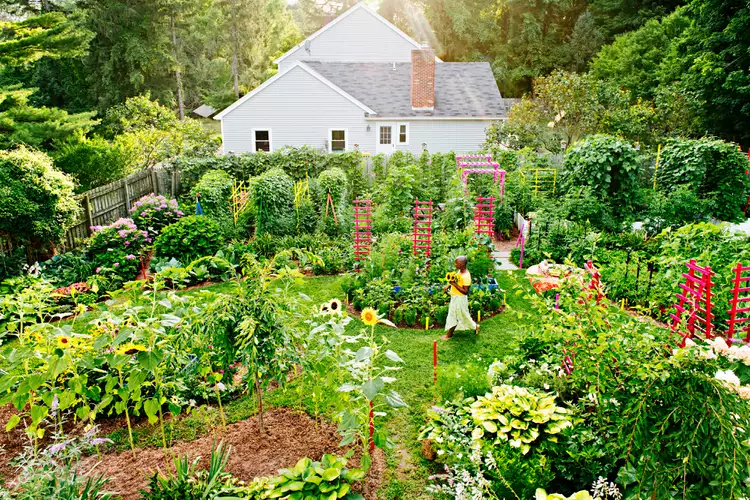
Scientists at the University of Minnesota Bee Lab suggest “Slow Mow Summer” as an alternative to No Mow May. This concept advocates for mowing infrequently all summer long while also looking to reduce lawn spaces in general. When replacing parts of your lawn, the key is to diversify your space with an increased number of plant species and plant types (herbaceous perennials, grasses, sedges, shrubs, trees), instead of just replacing one monoculture with another.
For example, many folks are broadcasting dutch white clover into their lawns as a lawn alternative in the hopes it also provides floral rewards for insects. However, it’s still a near monoculture that also doesn’t serve as a host plant for caterpillars (and caterpillars are important baby bird food in nesting season, not to mention those caterpillars turn into butterflies if they survive the birds).
Plus, that non-native clover mostly supports non-native honey bees that evolved with this plant, rather than native bees. Taken collectively, our native bees provide superior pollination compared to honey bees, while some 25% of them are specialists with specific groups of native plants (meaning the plant and bee rely upon one another as they co-evolved to use each other either for pollen or pollination).
One of the best things you can do after being inspired by No Mow May is to garden with plants native to your zip code, and to include a diversity of species that provide floral resources from spring through fall.
Tips for Mowing Less
When the goal is to mow less area less often through a more diverse landscape such as a designed meadow garden, you may be concerned about the appearance of your yard and also increasing your exposure to pests like ticks. There are a few simple strategies to help you achieve your goals while keeping the neighbors happy and the bad bugs away.
1. Create wider paths through the landscape.
Paths help show intention and provide access points, but making them wider helps you avoid brushing up against vegetation where ticks “quest” on leaf edges, reaching out to hitch a ride. One of the easiest ways to do this is by keeping a wide path mowed through a meadow area.
2. Increase plant diversity and habitat cover.
Encourage predators of species that serve as disease vectors by including habitat for them. Think owls, foxes, and coyotes, who prey on white-footed mice, a vector for Lyme disease that ticks catch when feeding on the mice.
3. Choose shorter plants.
Keep your plants under 2-3 feet tall. Pollinators still will have plenty to forage, but it will reduce the attractiveness to ticks. Shorter plants also can help with the perception of an intentional planting, versus having taller plants that may look "weedy."
4. Provide a sign.
When creating a diverse landscape in place of lawn, a sign explaining what’s going on and why helps a lot when it comes to staying on good terms with your neighbors and your local weed ordinance enforcers. A few habitat certification programs offer sturdy ones.
Avoiding Ticks
Recent research indicates that ticks are a minimal concern in urban and suburban yards. For example, a 5-year research study called The Tick Project found that there are fewer ticks in grassy areas compared to wooded ones. A 2-year study by the US Forest Service in Massachusetts showed that even lawn/meadow spaces at 10 inches high did not harbor tick populations.
However, you should always spray yourself with a repellent and do a body check after being outdoors.
Taking the Next Step
What No Mow May began, you can take to the next level with Slow Mow Summer. By reducing lawn and using a diverse mix of native plants matched to the site (soil, light, moisture), you’ll use less water and fertilizer while supporting bees and caterpillars. You’ll also increase ecosystem services through that plant diversity such as mitigating storm water runoff via dense, layered landscapes that also help clean and cool our urban air.
So go ahead and try a Slow Mow Summer if you want to as you think about how you can really move the needle in your yard. Visit a meadow garden in your area to get inspiration from the plant species that thrive there. Watch as native bees forage on blooms and birds nab caterpillars and beetles to feed their young. Then, through organizations such as Pollinator Partnership, the Xerces Society, Wild Ones, Audubon, and the National Wildlife Federation, learn more about those plant species and the wildlife they support so you can recreate the ecosystem in your yard.
Why? Because your landscape matters and can help turn the tide for a healthier, more resilient future that a monoculture of lawn (mowed or unmowed) will never provide.