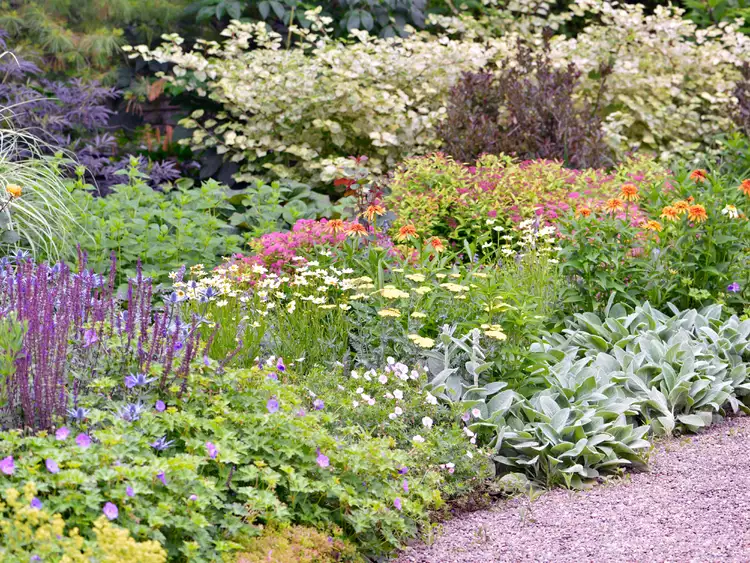
A well-designed border garden blends seamlessly into the surrounding hardscape. Often composed of a mix of perennials and annuals, these spaces are meant to add color and beauty to your landscape, while creating continuity and a sense of completeness. Use the tips in this guide to planting a border garden to select and arrange the best mix of plants.
What Is a Border Garden?
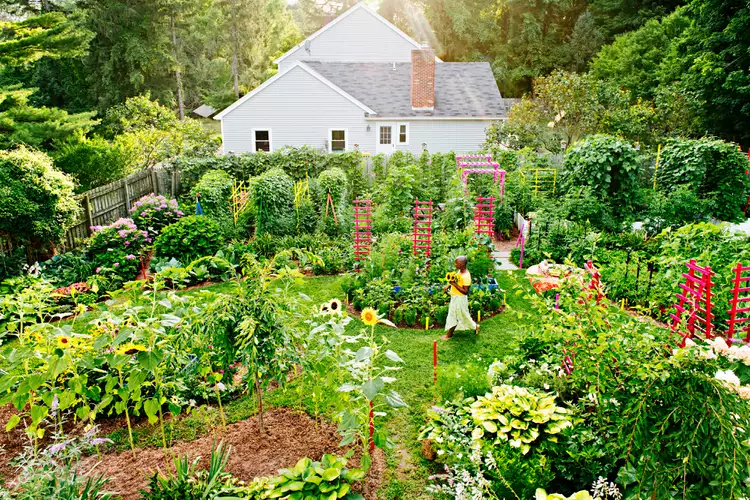
Border gardens are, by definition, gardens that function as a defining border around buildings, walkways, and other areas in the landscape. In the past decade or so, border gardens have taken on the purposeful task of habitat for wildlife, including birds and especially pollinators. Many designers are choosing to fill border gardens with species of plants that not only look good, but more importantly, create habitat that will support wildlife.
Tips for Planting a Border Garden
1. Choose a Color Scheme
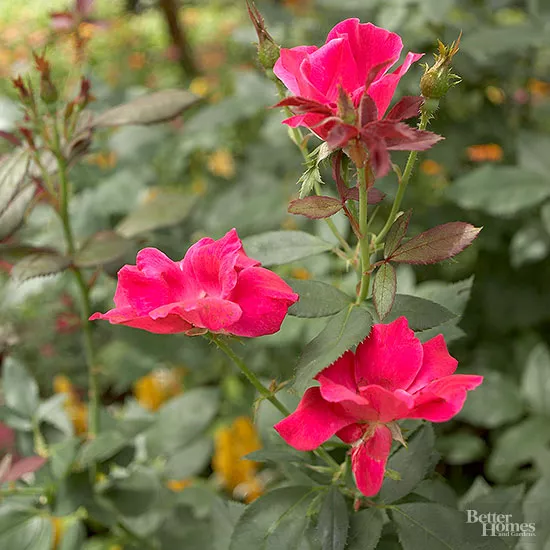
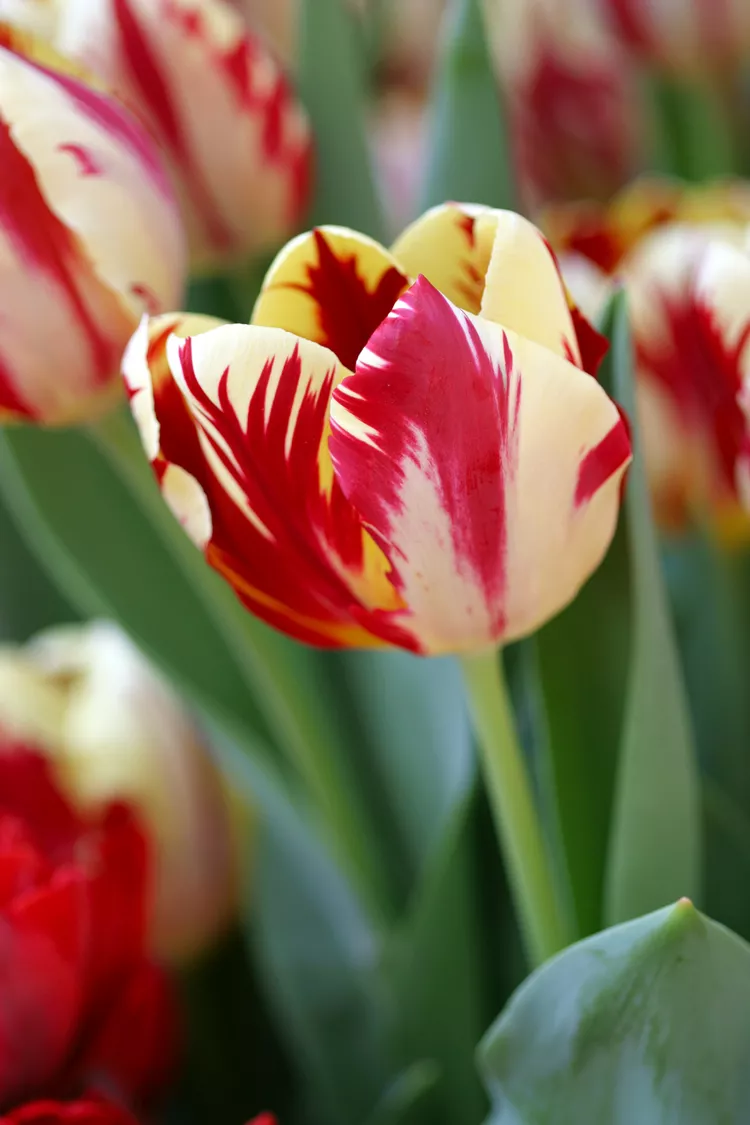
There are endless ways to go about choosing colors for your border garden. Maybe you love the elegant look of a garden composed of pure white flowers and nothing more. Maybe you like the boldness of hot colors. (Who knows? Maybe you're a diehard sports fans and want flowers in your team colors!) However, there are a few points to consider when planning for color.
Take note of surrounding structures. Is your house light or dark, neutral in color, or something flashy? Make sure that the colors of your garden contrast well with the house and nearby structures so that they don't blend together.
Be consistent with the rest of the garden. If you decide to go with lots of color, carry that style through everywhere. If you want to go with all white, continue that in other parts of the garden–at least for those in in view of your border garden. A border garden that does not match the existing landscape will look out of place and become a costly issue to fix later on.
Remember the color wheel. If you're unsure which flowers to plant together in a border, re-familiarize yourself with the color wheel. In general, mixing complementary colors—those on the same side of the wheel—creates a calmer feeling, while combining opposites on the color wheel has a more energizing effect.
2. Pick Plants with Similar Needs
A garden border is not purely an aesthetic endeavor—there are practical considerations to keep in mind too. Before planting a border, make sure the plants you have in mind not only work in the exposure your garden has—be it full sun, full shade, or somewhere in between—but that they have similar culture requirements. Do they all like well-drained soil? Lots of water or long periods of dryness? Picking plants that do well in the same conditions will ensure they all thrive and will make maintenance (like putting them all on the same irrigation schedule, say) much easier.
3. Overlap Bloom Times
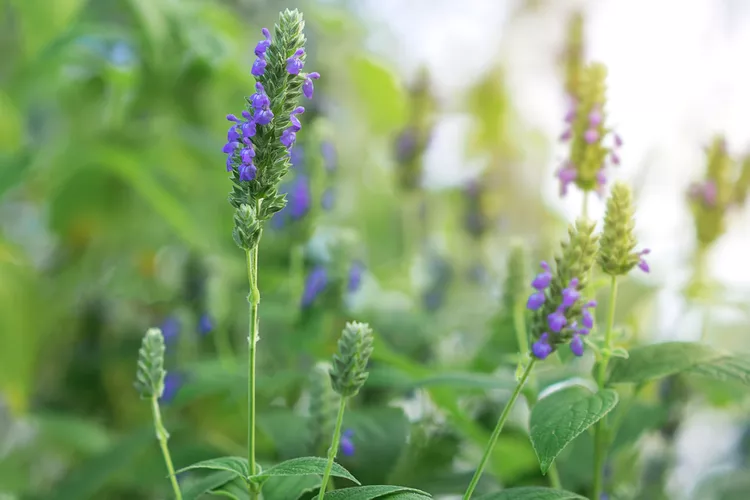
Many border gardens are primarily about providing color, usually from flowers. However, most perennial plants don't bloom non-stop throughout the growing season. In reality, many of these plants have set periods in which they bloom, set seed, and return to vegetative growth. That's why it’s important to consider bloom times and durations when choosing plants for your landscape.
Plot out your favorite plants. On a sheet of paper, draw a line and label it with the months of your growing season, then add a line above or below the baseline with the bloom times of various plants you'd like to grow. If you're stuck for ideas, look around your neighborhood, noting which plants look especially good during different times of the year.
Fill in gaps. Note any gaps in your bloom chart that might occur and search for additional species to fill in the holes so that there are plants in all phases of blooming throughout the season. This will be beneficial to the overall look of the garden, as well as pollinators.
4. Mix Textures
After considering colors and bloom times, it’s important to keep in mind the various textures plants can bring. Border gardens offer an opportunity to bring attention to surrounding structures and ideally, the border should provide texture and fullness.
While selecting plants, don't just look at flowers. Keep various leaf sizes, shapes, and arrangements in mind and try for a mixture that will provide a variety of texture. The vertical lines of ornamental grasses, for example, go nicely with other linear structures and pathways, while the thick, rounded leaves of many shade plants provide contrast. Collectively, the varying textures can be used to compliment and accentuate the surroundings.
5. Arrange Plants by Height
Border gardens can be used to create a screen and provide privacy, or they can be used to define a low perimeter. In either case and everything in between, it’s important to consider the height of plants in your border garden. As a general rule of thumb, taller plants should be situated toward the back of the garden while shorter plants should be at the front of the garden. Be careful not to block shorter plants with taller plants or hide groundcovers with larger, overhanging plants.
6. Consider Plant Types
Many border gardens are designed with both perennial and annual plants. Taking into account bloom times, heights, and textures, just about any mixture of annuals and perennials will do the job. However, note that there are pros and cons for each of these plant types.
Annuals typically need to be replanted (or reseeded) on a yearly basis, requiring more time, energy, and money to get the job done. However, annuals allow for a new set of plants, new colors, and more variety.
Perennials, on the other hand, only need to be purchased and planted once, though they often benefit from a little bit of care during the year, whether it be trimming, mulching, or dividing larger plants. Perennials also offer less design flexibility and usually cost more on the front end. On the other hand, perennial plants provide habitat throughout the year, provide excellent structure in the garden.
Keep in mind that border gardens are more than just a place filled with plants. They set a mood and compliment their surroundings. Well-designed border gardens provide valuable habitat and enrich your landscape year-round.
Beautiful Border Gardens
:max_bytes(150000):strip_icc():format(webp)/DeanRiddle_LobelGarden-2-471f24df377c480b9508877ce783955b.jpg)
:max_bytes(150000):strip_icc():format(webp)/hunter1705-015-dac8e4bb0c314a55a61d9af44f296078.jpg)
:max_bytes(150000):strip_icc():format(webp)/1016932611-db4a5821a8f44f7aa3f7678dc33ec6ad.jpg)
Frequently Asked Questions
-
What's the best size for a border garden?
Every space is different, but in general, ideally, it should be at least 2-3 feet wide to allow for different heights of plants. If you have room on either side of the border to reach the plants (and the will to maintain a large border!), you can go as wide as 6-8 feet.
-
When should I plant a border garden?
For most regions, you can't go wrong with spring planting. In warmer, drier climates such as California or the Southwest, it's even better to plant in the fall, when the soil is still warm and winter rains are on the way.
-
How do I create a low-maintenance border garden?
Look for perennials that don't require extensive pruning or deadheading if you'd like garden border you can plant and leave alone much of the year. Including groundcovers in your border will also help reduce weeds.