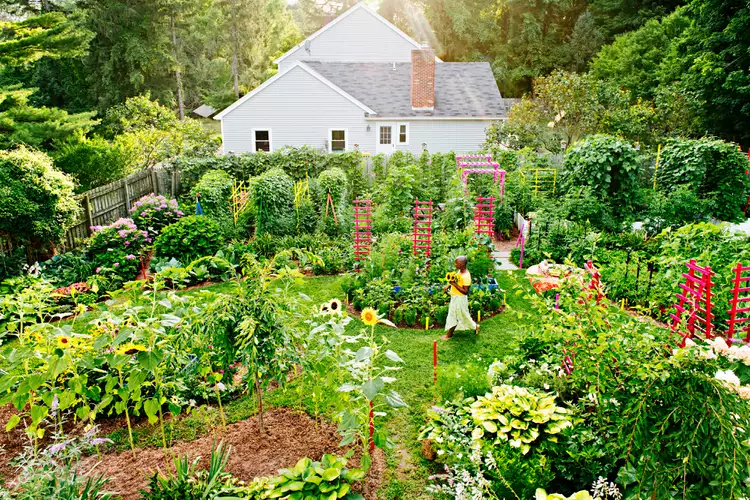

Made of fossilized aquatic organisms, or diatoms, diatomaceous earth (DE) is an all-natural, organic product commonly used as a mild abrasive in skincare formulas and toothpaste. Whether you have an extensive yard or only a few potted plants on your patio, you can use diatomaceous earth for garden pest control, soil improvement, and more. Whether you’re committed to organic gardening or simply want to expand your gardening toolkit, here are 7 easy ways to use diatomaceous earth for healthier plants.
What is diatomaceous earth?
Diatomaceous earth looks and feels like talcum powder, but it’s made of tons of fossilized diatom skeletons that are incredibly sharp to small insects. When insects come into direct contact with diatomaceous earth, DE slices through their exoskeletons, causing insects to desiccate and die in only a few hours. Unlike many pesticides, insects don’t build up a resistance to DE, and it can be used against most common garden pests, including:
- Ants
- Mites
- Earwigs
- Flea beetles
- Cockroaches
- Thrips
- Slugs and snails
DE does not discriminate between pests and pollinators. If it’s applied to plant flowers, it can harm bees, butterflies, and other beneficial insects.
How to Use Diatomaceous Earth in Your Garden
Diatomaceous earth works best when combined with other organic gardening techniques like companion planting for pests and building garden soil with compost. However, if you’re looking for a chemical-free way to improve your garden and keep pests at bay, targeted applications of DE can be a helpful addition to your pest-control strategy.
1. Pest Barrier
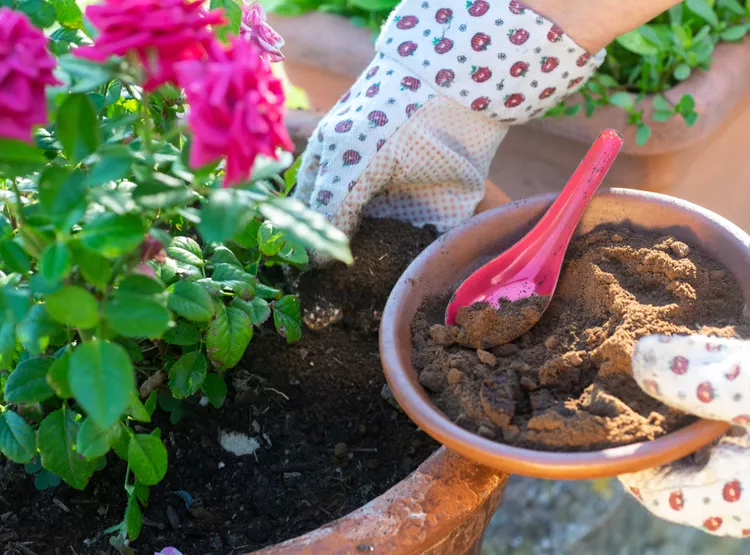
One of the best ways to use diatomaceous earth is to apply DE powder in a continuous circle around individual plants or the exterior of garden beds to keep pests from creeping in. This technique is often used to discourage slugs and snails from entering vegetable beds, but barriers of DE can also be sprinkled across the soil of potted plants or spread out on the windowsill of your potting shed to prevent ants from marching in. To make it harder for pests to infiltrate, apply DE in 1-inch deep bands that measure about 3 inches across.
2. Dry Application
DE powder can be applied directly to plants to treat active infestations of thrips, spider mites, and other pests, although it shouldn’t be applied to flowering plants for pollinator safety. Many gardeners apply DE powder by hand, but it’s even easier to spread with a DE applicator. To apply, sprinkle light layers of DE directly on the infested plant and reapply the powder as needed until the pests are history.
3. Wet Application
If you need to apply DE to hard-to-reach spots like the underside of plant leaves, add water. Wet DE can be applied directly to plants with a spray bottle or a garden sprayer, and it begins to work against pests as soon as it dries on the plant leaves. To make your own DE mixture, blend ½ gallon of water with 1 cup of DE powder.
4. Rodent Deterrent
Essential oils like peppermint, citronella, and cinnamon are often included in natural deterrents to repel mice and other rodents. You can make your own rodent deterrent by blending a few drops of these essential oils with a cup of diatomaceous earth and sprinkling it around outdoor areas where rodents are active. Since DE is highly absorbent, it holds onto the essential oils and makes them easier to apply. However, this treatment strategy should not be used in areas where pets are active.
5. Soil Pests
Invasive jumping worms have been causing an uproar in gardening communities recently, and there are no approved pesticides for these soil-dwelling pests at this time. However, some ongoing research suggests that mixing biochar and diatomaceous earth into infested soils may help control jumping worms. Unfortunately, DE may also affect beneficial earthworms, so only use targeted applications of DE if you want to try this technique.
6. Deodorizer
Highly absorbent DE can also be used to deodorize garden galoshes and other smelly items in your potting shed. Just poke a few holes in the sides of a small paper bag, sprinkle in some DE powder, and place the bag near the spot with unpleasant odors.
7. Soil Improvement
Diatomaceous earth is also sometimes used to improve soil structure, increase drainage and aeration, reduce soil compaction, and counteract waterlogged and clay-heavy earth. However, compost can also be used in this manner and is even more cost-effective and earthworm-friendly. If you want to use DE for soil improvement, mix it with compost first to stretch the DE further in the garden.
Tips for Using Diatomaceous Earth
Diatomaceous earth is relatively easy to apply, but these application tips will help you get the most out of DE and use this product safely and effectively.
- Only use food-grade diatomaceous earth. Pool-grade DE or crystalline silica is unsafe for gardens and dangerous if inhaled. Always double-check package labels to ensure you’re working only with food-grade DE.
- Don’t apply to flowers. DE is a less toxic pesticide option, but it can still harm pollinators that come in direct contact with it. To keep pollinators safe, only use targeted applications, never apply DE around milkweed and other pollinator host plants, and keep DE away from flowers.
- Apply in the evening. For pollinator safety, it’s wise to apply DE in the evening when bees and butterflies are less active. Refrain from using DE on windy days.
- Always wear proper safety gear. DE can be a lung and skin irritant, so don’t apply DE when children and pets are present. Remember to wear a mask, gloves, and goggles for safety.
- Reapply after rain. DE is only effective when dry; it can easily wash away in rainy weather. To keep your plants protected, reapply DE several times throughout the growing season and after every heavy rain.
- Use a light touch. Thick applications of DE on plants can block out sunlight and make it harder for plants to photosynthesize. It’s best to apply DE in thin layers.
- Be consistent. DE kills most garden pests but is not particularly effective against insect eggs. To tackle newly hatched pests, apply a second treatment of DE to infested plants a week or two after the first application.