
Getting rid of mosquitoes near your home can seem impossible, but the key is to minimize their breeding grounds so fewer of them are in your surroundings. A DIY mosquito trap is one effective way to help reduce mosquito populations around your property. Get step-by-step instructions below for making DIY mosquito traps from a bucket and a bottle.
These traps are a start, say experts, but keep in mind that controlling mosquitoes often requires several methods. Hiring a pest control company or using insecticides may seem like an easy solution, but you risk harming beneficial insects and inhaling toxic chemicals. Research also shows it’s an ineffective approach. You'll find more effective, expert-recommended methods below.
- Daniel Markowski, Ph.D., is a technical advisor for the American Mosquito Control Association.
- David Mizejewski is a naturalist with the National Wildlife Federation and author of Attracting Birds, Butterflies, and Other Backyard Wildlife.
- Tony O'Neill is the author of Simplify Vegetable Gardening and creator of the popular garden YouTube channel, Simplify Gardening.
How to Make a DIY Mosquito Trap
Two easy-to-make DIY mosquito traps are bucket traps and bottle traps.
How to Make a Bucket Mosquito Trap
One effective DIY mosquito trap is a bucket trap, which uses Mosquito Dunks in the trap. This method relies on using specific bacteria that come in the form of granules, briquettes, or a donut shape that are mixed with water to draw in female mosquitoes.
“Mosquito Dunks contain bacterial spores of Bacillus thuringiensis israelensis (Bti) that produce a protein crystal that is toxic only to mosquito and black fly larvae,” explains Daniel Markowski, Ph.D., technical advisor for the American Mosquito Control Association. “These microscopic crystals are ingested by the mosquito larvae when they are feeding in the water. In the alkaline environment of the mosquito’s digestive system, the crystals dissolve and convert into toxic protein molecules that destroy the walls of the insect’s stomach, thereby killing it.”
Replace or reapply a Mosquito Dunk after 30 days, when it dissolves and becomes less effective.
Materials
- 5-gallon bucket
- Straw or dry grass
- Mosquito Dunk
- Sturdy stick
- Water
Instructions
- Fill a 5-gallon bucket halfway with water.
- Place some straw or dry grass into the water, which will produce carbon dioxide as it breaks down in the water, attracting female mosquitoes looking to lay their eggs.
- Put a Mosquito Dunk into the water.
- Add the stick to the bucket to serve as a ladder in case any small animals fall in. The stick should reach the rim of the bucket.
- Place the bucket in a shady area away from where you spend time outside.
How to Make a Bottle Mosquito Trap
Yeast or baking soda are common ingredients in a DIY mosquito trap because they release carbon dioxide when mixed with water and sugar or vinegar respectively. “Female mosquitoes follow the trail of carbon dioxide and other chemicals that animals and people emit through their breath and skin,” says David Mizejewski, author and naturalist with the National Wildlife Federation.
The bottle traps work by "mimicking human breath,” explains Tony O'Neill, author and popular YouTube gardener. Attracted by the carbon dioxide, mosquitoes "enter the trap, but cannot escape and eventually drown in the liquid,” he adds.
Materials
- 2-liter plastic bottle
- Tape
- Yeast
- Sugar
- Vinegar
- Baking Soda
- Water
Instructions
- Cut an empty 2-liter plastic bottle in half.
- Turn the top part upside down and place it inside the other half of the bottle so it looks like a funnel.
- Tape the two parts of the bottle together to secure them. Leave the top uncovered so mosquitoes can fly in.
- Prepare a yeast mixture or a baking soda mixture. For a yeast mixture, mix ¼ teaspoon of yeast, ¼ cup sugar, and 1 cup of water. Add the mixture to the funnel. For a baking soda mixture, add ¼ cup of baking soda to the inverted bottle and pour in 1 cup of vinegar.
- After a couple of days, empty and refill the trap with a new mixture.
Use Multiple Solutions
The bottle mosquito traps work to varying degrees, but you’ll likely need to implement multiple techniques to reduce mosquitoes near your home. “In my experience, their effectiveness may vary depending on wind, airflow patterns, and the species of mosquito that are present in your area,” says Markowski. “Many of the homemade traps with these substances don’t produce enough carbon dioxide to attract more mosquitoes than your breathing would, so results are highly variable.”
Mizejewski adds that these traps may work for a limited amount of time, and you’ll likely need to create multiple traps to place around your landscape.
Combining various mosquito-reducing methods will leave you with fewer itchy, red bumps on your skin and less buzzing in your ear. “In my own garden, I've found that a combination of removing standing water, planting mosquito-repelling plants, and using homemade traps like the sugar and yeast solution have significantly reduced the mosquito population,” says O'Neill.
Ways to Get Rid of Mosquitoes
Along with a DIY mosquito trap, these expert tips will help you reduce this pest's population near your home.
Get Rid of Stagnant Water
Female mosquitoes breed where there is standing water. “Adult mosquitoes lay their eggs on or near standing water, and the immature mosquitoes (larvae) develop in the water before emerging to bite,” explains Markowski. If you have a well-kept pool, mosquitoes typically don’t hang out. “Mosquitoes usually do not breed in running streams or maintained swimming pools,” says Markowski.
The combination of stagnant water and organic material creates an ideal oasis for females to lay their eggs. “Because these mosquito larvae feed on decaying organic matter and other microorganisms, the water must be stagnant and contain some organic matter such as leaves, soil, or grass clippings to support mosquito development,” Markowski adds.
DAVID MIZEJEWSKI
Emptying and refilling bird baths every couple of days effectively removes any mosquito eggs and larvae; it should be done anyway to keep the water fresh for the birds.
Mosquitoes don’t need much water for a breeding ground. “Any spot that holds water for longer than a few days will be used by mosquitoes for egg laying, from kids’ playsets to flower pot drainage dishes to garden decor, so be sure to check and drain them regularly," says Mizejewski.
Markowski also advises eliminating breeding sites as much as possible. "Dump water from buckets, flower pots, tarps, wheelbarrows, and tires, and if possible, turn them over or cover them so they can’t collect more water,” he says.
Maintain Your Yard
Growing different types of plants creates biodiversity and helps with natural pest control. If you have big expanses of lawn or shrubs, maintaining these areas is key to limiting mosquitoes from taking refuge. When you leave them unkempt, you may inadvertently be creating safe spaces for these unwanted pests. “Trim tall grass, bushes, and overgrown vegetation where mosquitoes like to rest,” says O'Neill. “This reduces their hiding spots and makes your yard less attractive to them.”
Grow a Biodiverse Garden
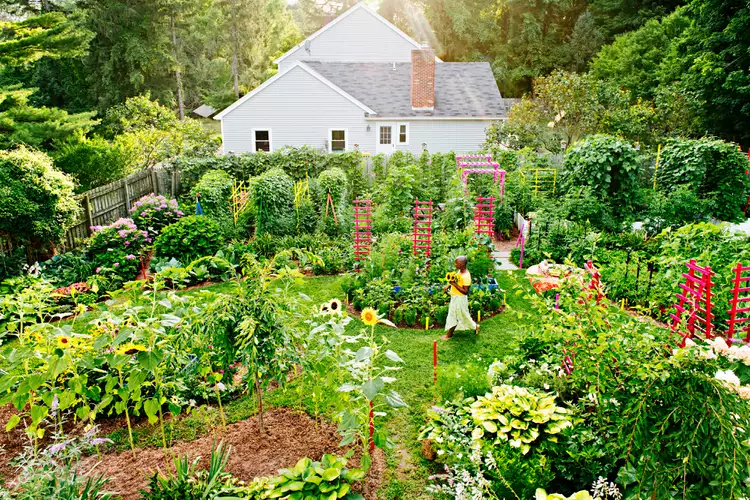
Creating a thriving garden with biodiversity to attract beneficial insects and wildlife is another way to reduce mosquito populations. “Cultivate a natural landscape by planting native plants,” says Mizejewski. “Native plants are the foundation of the food web that supports mosquito predators, from bats and birds to dragonflies and frogs.”